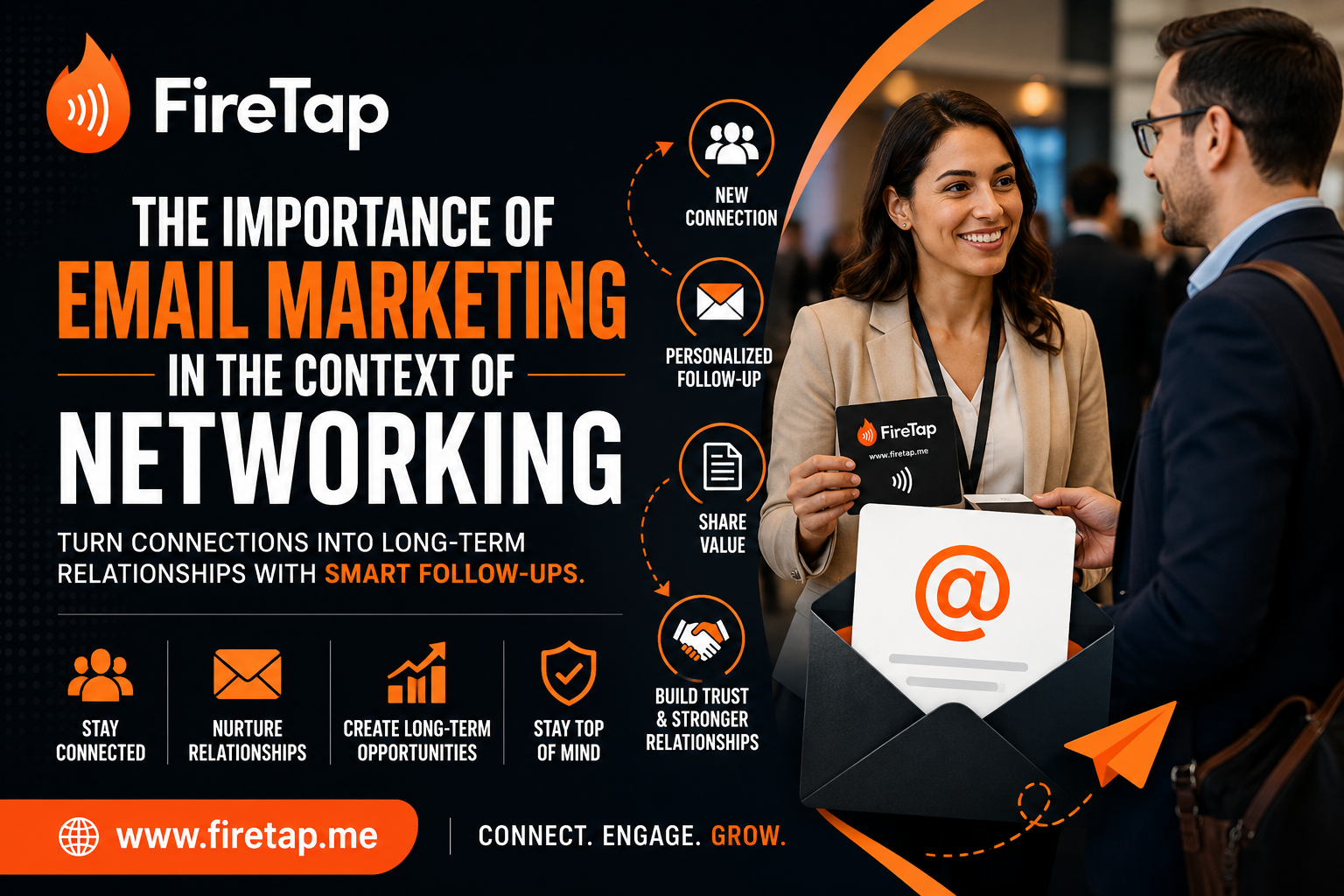
The Importance of Email Marketing in the Context of Networking Conventional networking and follow up is not applicable to every industry or businesses.
If you work in Restaurants, Hotels, Real Estate, Professional Services or even in a brick & mortar boutique, there are great chances that you will not call your new connections after a networking event.
Here are few examples:
-
A restaurant owner meets potential clients at a local business networking event: Calling the client over the next days and ask “Do you want to reserve a table?” Not realistic and even for some, intrusive.
-
A luxury Realtor meets a potential buyer at a local gallery opening. Calling the next day to ask, "Ready to buy a $2M mansion?" is jarring.
-
An accountant meets a small business owner at a Chamber of Commerce event; Calling to ask "Do you want to switch your CPA?" is a heavy lift, as changing financial providers is a high-friction task.
-
A creative director meets a marketing manager at a tech conference: Pitching a full rebrand via phone is rarely successful without a specific project on the table.
Networking has always been about building relationships. Whether it happens at a business event, trade show, conference, local meetup, or through a simple introduction, the goal remains the same: create meaningful connections that can lead to future opportunities.
But making a connection is only the first step.
The real value of networking comes from what happens after the first interaction. This is where email marketing becomes an essential tool.
Networking Does Not End After the First Conversation
When you meet someone at an event, exchange business cards, scan a digital profile, or connect on LinkedIn, the relationship is still very new. Without a follow-up, that interaction can quickly be forgotten. People meet dozens, sometimes hundreds, of contacts during events. Even if the conversation was positive, it is easy for your name, company, or offer to get lost in the noise. Email marketing helps extend the life of that first connection. A thoughtful follow-up email allows you to reintroduce yourself, remind the person of your conversation, and provide value while the interaction is still fresh. Instead of relying on memory alone, you create a structured and professional way to continue the relationship.Consistency Builds Trust
One of the biggest mistakes people make in networking is treating it as a one-time activity. They attend an event, meet new people, collect contacts, and then move on. Strong networks are built through consistency. Email marketing helps you maintain regular contact with your audience. A monthly newsletter, occasional update, or targeted follow-up sequence can keep your brand top of mind. The goal is not to constantly sell. The goal is to stay useful.
For example, you can send: • Industry insights • Event recaps • Helpful tips • Case studies • Product updates • Exclusive offers • Educational content • Invitations to webinars or networking events
Over time, this consistency builds credibility. When a contact eventually needs your product, service, expertise, or recommendation, they are more likely to think of you first.
Email Creates a Direct Line of Communication
Social media platforms are useful, but they are often crowded and unpredictable. Algorithms decide who sees your posts, and messages can easily be missed. Email is different. When someone gives you their email address, they are giving you permission to communicate with them more directly. This makes email one of the most valuable channels for nurturing professional relationships. In the context of networking, this direct access matters. It allows you to: • Follow up after a meeting or event • Share relevant resources • Invite contacts to future events • Promote new services or offers • Stay visible over time • Build trust through consistent communication
Email marketing gives you the ability to stay present without being intrusive, especially when your content is useful and relevant.
Email Turns Contacts Into Relationships
A contact list is not the same thing as a network. A contact list is simply a database of names and email addresses. A network is a group of people who know you, understand what you offer, and see value in staying connected with you. Email marketing helps transform contacts into relationships by creating repeated touchpoints. Each email is an opportunity to strengthen the connection. You can share your expertise, show your personality, highlight your values, and demonstrate that you understand your audience’s needs.
This is especially powerful after networking events. Instead of sending one generic message and disappearing, you can create a follow-up journey.
For example:
- A thank-you email after the event
- A helpful resource related to the conversation
- A newsletter with industry insights
- An invitation to reconnect or book a meeting
- A personalized offer or collaboration opportunity This process makes the relationship feel intentional rather than transactional.
Personalization Makes Networking More Effective
Modern email marketing is not about sending the same generic message to everyone. The best results come from personalization and segmentation. Not every contact has the same needs. Someone you met at a trade show may be interested in your services, while another person may be a potential partner, supplier, client, or referral source. By organizing your email list into segments, you can send more relevant messages. For example, you can segment contacts by:
• Event attended • Industry • Location • Role • Interest • Stage in the relationship • Type of opportunity
This makes your communication feel more personal and valuable. Instead of receiving a generic newsletter, your contacts receive information that actually matters to them. In networking, relevance is everything. The more relevant your message, the more likely people are to engage.
Email Marketing Supports Long-Term Opportunities
Not every networking contact will turn into an opportunity immediately. Someone may not need your services today. They may not have the budget right now. They may need approval from their team. Or they may simply not be ready. That does not mean the connection has no value. Email marketing allows you to nurture relationships over time. It keeps the door open until the right moment arrives.
This is especially important in B2B environments, where sales cycles can be long and decisions often require multiple conversations. A person you meet today may become a customer, partner, investor, supplier, or referral source months or even years later. Without email marketing, many of these opportunities disappear because the relationship goes cold.
Email and Digital Business Cards Work Well Together
The way people exchange contact information has evolved. Traditional business cards are still used, but digital business cards and smart profiles (such as Firetap) make networking faster and easier.
These tools are powerful because they reduce friction. A person can tap a card, scan a code, save your information, or submit their contact details in seconds. But the real power comes when these tools connect to your email marketing strategy.
When a networking interaction automatically leads to a structured follow-up, you create a stronger system. Instead of manually entering contacts or forgetting to follow up, you can guide new connections into a professional communication flow.
This turns a simple introduction into a long-term relationship-building process.
Best Practices for Using Email Marketing After Networking
To use email marketing effectively in a networking context, focus on quality over quantity. Send your first follow-up quickly, ideally within 24 to 48 hours. Mention where you met and include a detail from the conversation when possible. Keep your message short and useful. Avoid pushing for a sale immediately unless the person clearly requested it. Provide value before asking for something. Share a resource, insight, article, offer, or introduction that is relevant to the person. Use segmentation. Not every contact should receive the same message. Be consistent, but respectful. Staying visible is important, but overwhelming your contacts with too many emails can damage the relationship. Always make it easy to unsubscribe. Permission and trust are essential in email marketing.
Conclusion
Networking is the beginning of a relationship, not the end goal. In a world where people meet more contacts than they can remember, consistent and relevant communication is what makes you stand out. The most successful networkers are not only good at meeting people. They are good at staying connected. The right tools make that possible.